Friday, August 05, 2022

Continuous Education - or where does learning stop.

Analysis paralysis is that state where you keep working on something, never finish it, because you're constantly thinking that you can make it better. You just keep doing the studying, the analysis, and never really engage on the project.

Learning and education can be like that as well. I remember, as a student, when I had a project to do, I'd start off in the library. It would take a really long time to get the work started, because I needed to make sure that I'd read absolutely everything I could about the subject before I started working on it.

But, of course, you can never really know everything. You can only know, what you know at that moment. And there's this fear that either, you don't know enough to do the work, or that if you knew more, you'd do a better job.

And it does not matter what career you're in, as The Desiderata says, "...for always there will be greater and lesser persons than yourself."

I like working with software and doing software development. I enjoy automating processes using computer programming. And in my life, I've worked with so many different languages, getting really good at some, and superficially competent in others. For a big part of my career, I wrote desktop applications and now, it's all either web-based, or mobile. And ultimately, I think that responsive mobile technology that also fits the web will win.

And this means learning new ways of writing software. Unlike the world of the 80's and 90's and even the 2000's, the choice of what tools to write software with is astounding. You cannot master everything, but can try to be really good at one or two.

And I have finally fixed my attention on the Python programming language. It's not the best, but it certainly is quite popular. It's easy to use and learn, and if you are a software algorithm fanatic, you can do some really cool things with it - both on the web side of things and also on the mobile and desktop app side of things.

My love for complex programming languages like C++ is still there - and I may keep flexing those muscles on non-work related things, just to keep interested and busy.

Something like this blog (and it's sister blogs about software development) which were originally so focussed on being good, but are now focussed on discussing what goes on in this mind of mine.

Python is a great language for doing so many things with information - after all, we are living in the information age. And like typing and writing, computer programming should be one of the basic tools that students leave college with. Arguably, being able to write comprehensively in any language is a good skill, but it's not a necessary skill for all types of work. Being able to write competent software helps build logic skills, which, like reading, writing and arithmetic, go a long way to keeping the brain flexible.

But having learned Python the next step was to select different frameworks for doing some of the work that I need to do. For web programs, I started learning how to use the Django framework, but soon gave that up for a lighter, easier, simpler framework called Flask. Django is a pre-built house, you just go in and move a few walls, paint and furnish and you're done. Django comes with database connectivity and security built in.

Flask, on the other hand, is like cement, bricks, wall and floor components as well as some fixtures. You assemble them yourself, build the house. Unlike Django, there's no house for you to start with, you need to assemble the basic stuff but that's very quick. You can get a simple Flask application running faster than a Django one (though the Django crowd may disagree).

And for desktop apps, I had settled on the Tcl/Tk interface (tkinter) that ships with Python. However, I discovered Kivy, which while takes some time to learn, does things a little faster once you have learned how to use it. With the added bonus that Kivy allows you to build mobile apps.

I'm ignoring everything else for now.

And hey, that doesn't mean that I won't start building apps until I've learned the entire language. Nope, apps are already being baked. And I have the added audacity of planning some tutorials which I'll release on my Python blog. For me, teaching is a way of learning.

Thoughts on my career.

I don't think that there's a perfect definition of the term employer. Looking at the Oxford definition, an employer is a person or organization that employs people. This seems very broad. Employ does not necessarily mean pay, but if we narrow that definition to include responsibility for paying those you employ, then perhaps we have a definition we can discuss issues around.

My first paid employment was with an engineering company in Kenya called East African Engineering. I don't remember too much about my responsibilities, but it was not a desk job. East African Engineering was mainly involved in road construction and I recall an assignment to measure traffic along a section of the road from Kenya into Uganda at the border town of Malaba. For an entire week my team took turns to count and categorize vehicles that were using the road. The goal of this exercise was to collect enough data for the engineers to design the upgrade of that section of the road that needed urgent repairs. 

Another part of the job with East African Engineering was lab work. We received soil samples from various parts of the country and our task was to measure certain properties of the soil. Mostly mechanical properties such as plasticity.

Regardless to say, I once thought I wanted to become and engineer, but after a summer at that job, I decided that this was no way I wanted to spend my life.

I graduated as an architect in 1990 during a serious recession in Canada. Most companies were folding up in Montreal and moving to Toronto. So when I graduated I spent months looking for work, handing resumes to countless construction and design firms in the city. I was finally hired as a draftsman by the architectural/engineering duo Kotansky and Kotansky. Two brothers who had a firm in Montreal and were doing a lot of work for the Canadian Tire company. Apart from Bill Kotansky, I was the only other architect in that office, but the other draftsmen knew much more about construction drawings than I did. It was here that I first used AutoCAD and fell in love with computer-aided drawing. I was at the bottom of the food chain and in the mornings it was my job to clean the kitchen and make the coffee. I did the dishes at the end of the day. We did not have kitchen cleaning staff, although the landlord cleaned the carpets and collected the garbage. 

During my summers at school, I worked often for one of my professors, Kumar Malde, possibly the best teacher in any subject that I ran across. My love for construction returned during my summer jobs in his office where we did a lot of timber and glue-laminated construction buildings. In this office, I continued to develop my software development skills, primarily using the Pascal programming language to help in the many engineering calculations we needed to do. 

I finally decided, possibly because of the recession and the fact that I started to realize that a career in design and construction would require personal connections, that I would move into software development. I saw both Bill Kotansky and Kumar Malde doing a lot of sales work, pitching their firm and their business and leaving the actual work to employees.

I completed a diploma from a private vocational training school - CDI (Career Development Institutes) - focussed on computer programming. I also studied computer network principles and graduated with an additional diploma as a network technician. These served me well as CDI employed me to teach the Programmer Analyst curriculum at one of their colleges. 

After a few years teaching, I moved to their head office to their curriculum development team. I was finally in charge of the development and maintenance of the software development training. I was finally in management and even though I wrote one course (to teach Visual Basic) and pitched another (C++), most of my time was spent evaluating courses written by other publishing houses for purchase and education at our college system.

A few years in curriculum development and the itch for "real" work came back. Many of my students had graduated and were finding better paying, more satisfying work in the "real" world. Finally an job posting caught my eye. The Colleges of Applied Arts and Technology Pension Plan was looking for a Systems Administrator. Not specifically a programmer, but someone to take care of the technology. I applied for the position and after a few rounds of interviews, moved from CDI to CAAT.

It was at CAAT that I spent the next 22 years. From Systems Administrator to Director, Information Technology. From a staff of one (me) to a team of about twelve people including a software development team, a network and infrastructure team, a helpdesk and the start of a data management team.

I now considered myself an employer because I directed the team's work. In hindsight, I think the team was on of the best that I have ever had the opportunity to work with. As Paul Getty is quoted as saying, "An employer generally gets the employees he deserves."

But after 22 years of building the team, and working steadily and seeing the organization grow, it was time to return to my roots back in Kenya. My father was ready to retire and asked me to return and run his companies. Plural. A real estate company with one successful project and others in planning. And a farming company, originally started with coffee and tea, but now focussed mainly on avocado for export.

I am by no means a real estate professional, neither am I a farmer. Anything and everything that I have learned in my careers has been focussed on software projects. Even my early career quickly turned to software when I was exposed to AutoCAD. Even then, rather than spend time drawing using the software, I spent more time learning the underlying scripting language, AutoLisp, so that I could automate repetitive tasks. Why draw the same bathroom fixtures over and over again? Why draw the same windows, or doors, or electrical or plumbing fixtures. Draw once, then automate. Not just cut-and-paste, but actually run software to place these items given coordinates and other commands.

At CAAT, I wrote the first pension estimator, before the Internet, and it was shipped to the various colleges so that individuals could calculate pension estimates. That led to various web tools.

In my new role as employer I have to take a broader look at the company and figure out what the long term goals are. Given my technology background, the very first thing I did was move everything into the digital workspace. In a strange turn of events, COVID-19 ravaged the world and the changes I made allowed existing processes to continue suitably changed and automated.

In my new role as employer, different things keep me awake at night. Like our tax agents, making payroll each month, paying suppliers and other service providers, handling employee issues completely unrelated to work, hiring to expand and terminating employees who are no longer a fit.

In my former roles, I worked very hard to keep my job, to be successful based on the opinion of my supervisors, managers or even higher up. I worked hard to be recognized which was key to getting promotions. Long hours because I was not in control of any of the deadlines.

I'm slowly getting used to the idea that the buck (or in Kenya the shilling) stops with me. In thinking of these two lines of business, I must be bolder and channel our energies to work that is profitable. Like my father who moved away from coffee and tea as the main crop, while keeping the focus on farming and food production. Even the real estate venture was an opportunity which had huge risks and could have either succeeded well (which it did) or failed horribly.

As an employee I had no real emotional attachment to the company, other than the fact that it was providing my livelihood. As an employer I am starting to see this business as a child that needs to be nurtured and directed to grow as I see fit. To take calculated expansion risks and actively listen to advice that benefits the overall survival of the company.

Profitability is one measure of the health and well-being of the company. But so are non tangible factors such as smoothly running operations (how do you measure that), employee engagement (how do you measure that), work/life balance.

For now the focus is on articulating a strategic plan for the next five to ten years. I have enough knowledge in both real estate management and farming to properly manage the various teams. And this has only been three years.

Life is strange. Never would I have imagined or dreamed that I would be in his position. Not working specifically for a paycheque, but working to do good work for the sake of building something personal. And engaging like-minded employees who are willing (for money) to work hard to achieve my goals. Using their specific skills whether it is in farming, or tax/accounting or general sales and marketing.

One thing I know though is that business skills come from many areas. And my technical background is an asset in engaging systems for both food production, sales and marketing or just process management. I am definitely looking forward to the next 10 years of this company.

Friday, April 22, 2022

Lifelong Learning - The Renaissance Approach to Life


It must be simply amazing to be a child, exploring the world, knowing nothing, but not knowing that you know nothing. The entire world is amazing and everything is interesting.

Then come the challenges of formal education, knowledge acquisition, tests and certifications. There's still a lot of enthusiasm about life, especially if you are studying something that really interests you. I came across Architecture by pure accident, heading straight for an engineering life. But a summer job with East African Engineering soured my taste for that work and I switched into something that was more challenging.

Finally, after formal schooling, armed with the right paperwork, you enter the real world, ready, batteries charged expecting to find a reality matching the creative and exploratory world of formal education.

But alas, that is not so. Most of you will not end up in the vocations in which your formal education certified you in, but that's OK. I truly believe that the function of formal education, post Renaissance, is an opening of the mind, unlocking potential. While clerical and repetitive work is still required, and still very valuable, many of us will have multiple careers spanning very many different types of work which will not necessarily have an opportunity, or luxury, to for formal training.

And so you must become a lifelong learner.

Picasso is often quoted as having said, "Every child is born an artist, the problem is how to remain an artist once he grows up." That quote sums up a lot of what is happening in education today. That at some point, we stop learning.

Being a lifelong learner means that you must have the desire, make the time and have the patience and persistence to explore your interests in this world. I said that. And explore it in a meaningful way by taking action. Doing things that reflect this passion to learn. 

I have former employers who are passionate about teaching, and are teaching and writing and working. By teaching they are exploring the subjects that they are passionate about, reading about them, attending conferences, sharing thoughts with like-minded people, and learning the latest technologies driving those topics.

It doesn't take much effort, if it's something that you really want to do. However, in our fast food world, when results don't appear quickly, we often give up. I have a clarinet that I one day intend to master, but I simply don't make the time to practice. That alone says a lot.

But I spend a considerable amount of time journaling, writing software and even creating YouTube tutorials on various software topics. That also says a lot about where my interests lie.

And a quick look at my library, what I read and what I'm most comfortable discussing will tell you that while it does not line up in parallel with my day job, there is an overlap that allows my interest to spill over into my employment.

Desire, Reality and Practicability

In our twenty-first century thinking, we tell our children that they can grow up to be anything that they want to be. And many of us will immediately realize that the statement is not a statement of reality, but one of inspiration. If you reach for the stars, you may end up touching the moon. Pushing this idea too much in education may seriously injure some children, while others may not be affected at all.

And so too in life, there must be a healthy balance between what is desired and the practical reality of what can be achieved. There is no formulaic answer to this question for everyone. It depends greatly on circumstance and is specific to each individual. I personally think it's a wonderful world in which no two of us are alike, and so comparisons of skills become a moot debate. In a world that values financial success as absolute success, this can be difficult to mentally reconcile. But getting over this hurdle is the first step to success itself.

Our educational systems train us into various disciplines. We cannot achieve the Renaissance ideal and work in a variety of fields. But the Renaissance ideal is the approach to life. It is OK to have a passion for sculpture, painting, gardening, nature as well as science, abstract thought, teaching and literature. And while it may seem that these passions may be doused if your day job entails handling irate customers in a call centre, or managing a reception desk, the reality is that these interests can be exercised, honed in the event that the circumstances change.

Here's what I mean.

Gone are the days of a fixed career, doing the same thing. It's more likely that the job you have when you leave school will not be the same job that you have when you are retiring thirty years later. Even if its with the same company. While the career path from a clerical, processing task-oriented job may ultimately lead to managing those responsible for the task, its also likely that that type of work will not exist by the time you are ready to manage it. Your current job will likely change right before your eyes even if its due simply to changes in technology. In fact, being outsourced to computers is happening right now.

And one way to mitigate the risk of becoming obsolete is to continue to flex your mental muscles. Anything you do, outside your regular day job, will flex those muscles as long as it involves learning. And all learning involves gaining new skills. New skills are skills you don't have now. Or, an improvement, upgrading, enhancement of skills that you have. Speaking skills by taking Toastmasters classes. Project management skills by taking classes, or even joining volunteer organisations outside your workplace that put you in management roles. Finance skills by formal training.

And the list can go on. However, the aim is to keep looking at your interests and taking real action to build on them.

As a formally trained Architect, I confess that my ability to construct a building today would take some time to review my class notes (which are very obsolete), however, one of the great things about studying Architecture was its multi-disciplinary approach. A little bit of engineering, a dash of art, a smattering of literature, a spoonful of project management all baked in the study of regulations and legislature. And Oh, don't forget sales - all project work was presentation based. So when I graduated, like many in my class, I was a jack of many trades, a master (as yet) of none. And many of my classmates have succeeded in becoming interior designers, project managers, photographers, artists, engineers and yes, architects.

I suspect that the same applies to a lot of fields. This is probably why many politicians are lawyers, as are corporate leaders. And why educators come from all fields.

My challenge therefore is for you to:

  • List your interests, formal skills you'd like to acquire or enhance.
  • Find time to practice one of them.
  • Read and find literature to enhance this skill.
  • See where it fits in your day job - you'd be surprised that some of the skills will find a home there.
  • Find groups (it may be professional associations or social ones) that you can join to learn more.
  • Read, read and read more.
Lifelong learning is a skill, and one that is absolutely necessary for survival in a world that is constantly changing.

Tuesday, March 29, 2022

Writing Practice

I was at a book launch about a week ago, the author, a respected accountant, auditor and lawyer was introducing his second book on taxes. The event was very well attended and interesting. This was the very first book launch I had ever been to and I compared it to a graduation party. In essence, it was a graduation party.

The guest speaker, a high profile cardiologist, gave us excellent background on the author, who is very credentialed. But also admitted that they have not written a book. He was also followed by some high profile members of society in our country, including some academics at a couple of the various universities, and they too admitted that while they had written academic papers, they never had the courage, or patience, to write a book.

In fact, only one other person in the audience had written a book and when she spoke, gave the audience insight to the difficulties in writing.

Writing a book is hard.

Writing a paper in a subject you know very well is not as hard. It might be challenging, but it's not hard.

Writing a blog, like this one is easy. Because it is personal and the time I have to spend on it is not a lot.

I have written a couple of book-length treatises. I have not had the will to publish them because even when I finished writing them, I was not sure that I had done justice to the story I was trying to tell. After putting down the story for a couple of months, and re-reading it afresh, I thought differently.

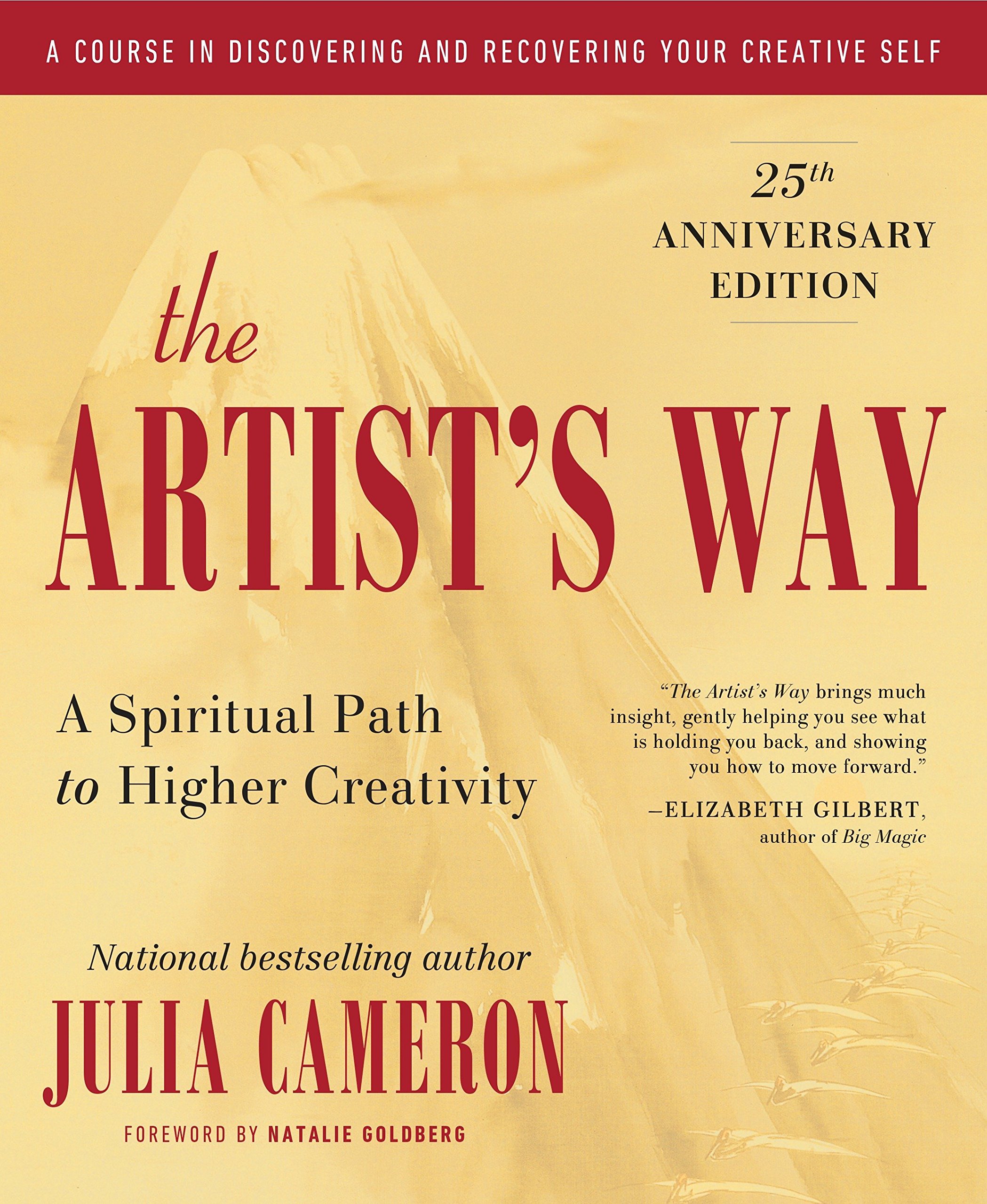
Julia Cameron is a published author. I have not read any of her fictional work, but I have read a couple of books that have inspired me to pick up a couple of books that I started years ago with the intention of completing them. Whether the story is successful is not the point. At this juncture, the point is to get a book length book completed.


The first book of Julia's that gave me practical advice was The Artist's Way. This book introduced the practice of Morning Pages. An exercise where you write, on a daily basis, three pages in longhand (not typewritten, but using a pen and paper). You do this every single morning. I started writing Morning Pages in February 2022, and so far, almost 60 days later, I can tell that my attitude to sitting down to writing is very different.


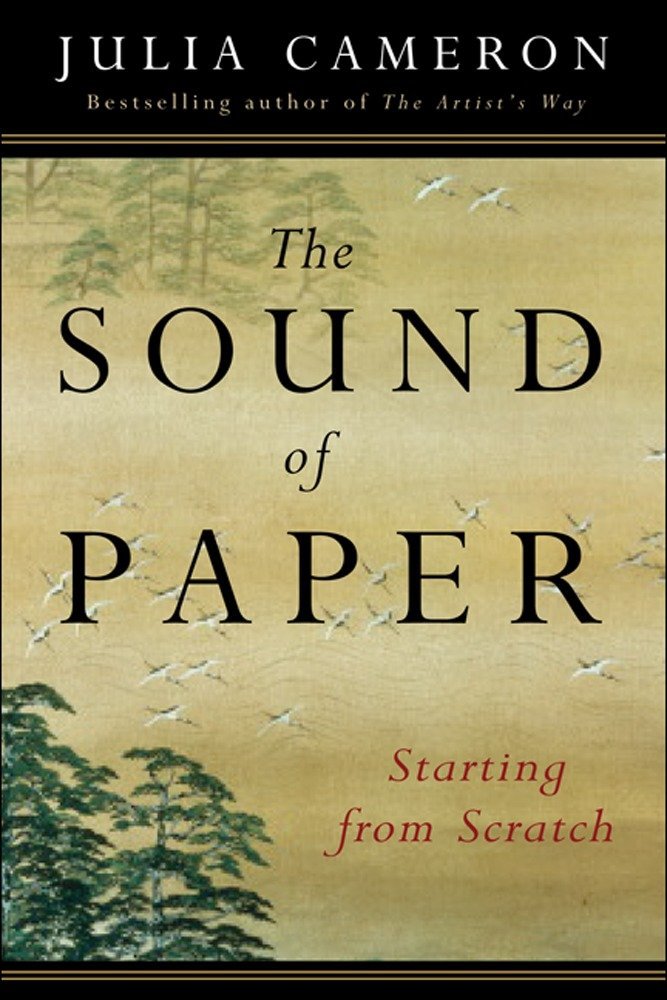
The second book, which I think must be read after one reads The Artist's Way, is The Sound of Paper. In The Sound of Paper, Julia describes the life of an artist in a very human way. The challenges of sitting down to do the work. Periods of droughts. Periods of doubts. Waiting, or not, for Inspiration (capital "I"). The curse of the ever present critic. The disastrous aiming for perfection. Nurturing the inner child. There's a ton of good advice to unpack in this book, but I would have only comprehended it after reading The Artist's Way.

My inner critic is not gone. But they are manageable.

My search for perfection is problematic, because I still pause a lot in the first draft, but I can now see pages happening on a daily basis. They're not all good pages, but I'm moving forward.


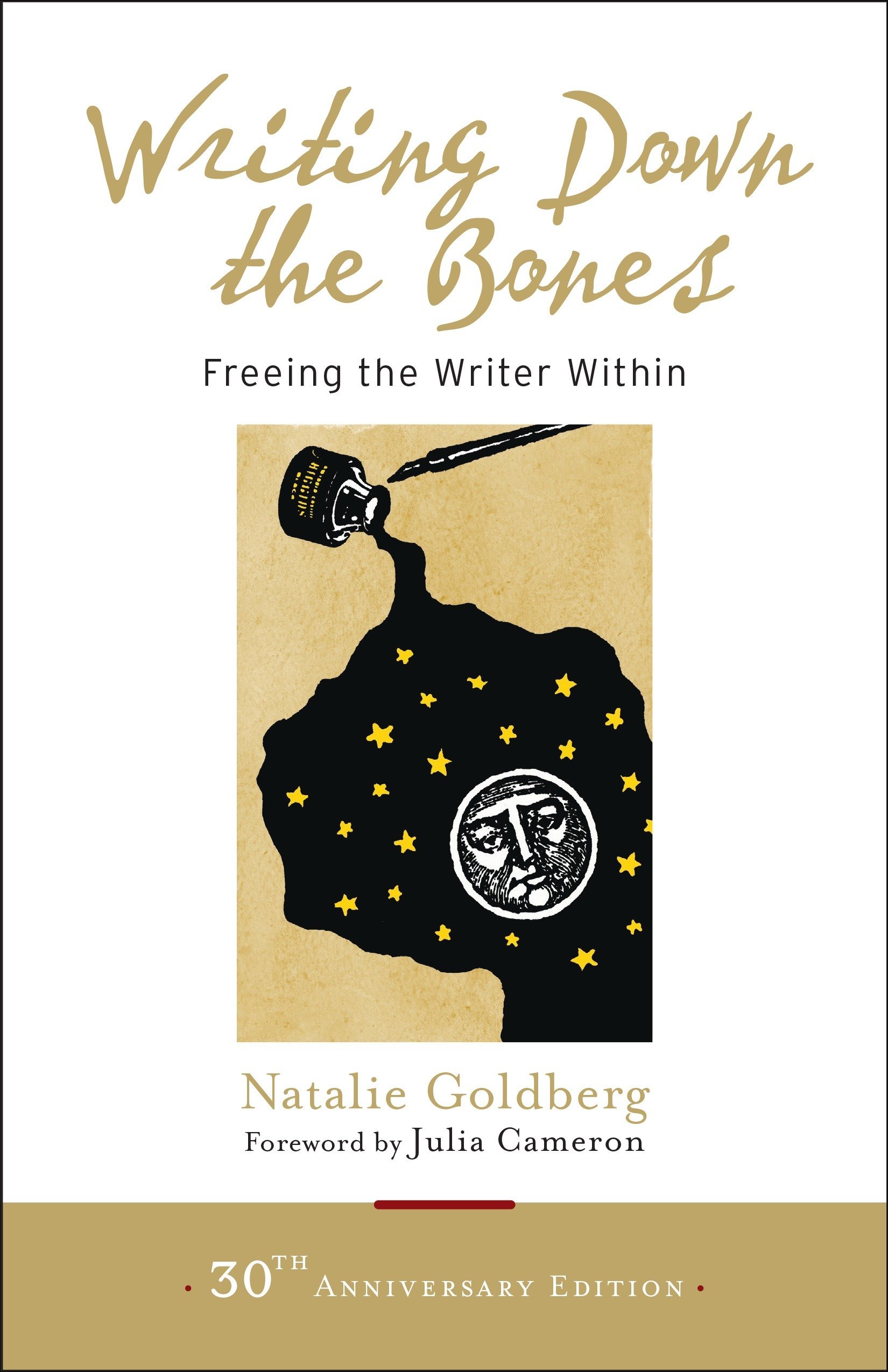
Before I read The Artist's Way, I had read Natalie Goldberg's book, Writing Down the Bones. In Natalie's book, a similar writing practice where you do not lift the pen off the page, but keep it moving is encouraged. I admit, it's been a while since I read Natalie's book, and it was Julie's book that actually got me moving on writing seriously again, but the two books fill that need to practice between the serious writing. And so I do both. In the morning, I spend time writing the three pages, longhand. And I do it in the Natalie style, continuous movement without interruption. And then at lunchtime, or when I know I have about fifteen, or more, minutes to spare, I take my pen again and in the style of Natalie, I write.

Right after my Morning Pages exercise, I try to write a couple of pages of my book. Whereas before I would not even dare contemplate writing until I thought I was inspired, I simply sit at the keyboard and start writing. Sooner or later, my muse catches up with me and we work together for a while. Some days I can only write one page, other days more. But the point is that I don't wait to "feel" like writing, to sit and write. In fact, most days I actually don't "feel" like writing, but I open the novel that I'm working on, go all the way to the bottom, read the last sentence and just start. Shitty first drafts, that's what I do.

I said earlier that writing a book is hard. Writing a novel, between 50,000 and 110,000 words is difficult. And to achieve that takes more than talent. Talent accounts for a small portion, dedication and work (putting in the time) counts for much more.

So I'll leave you with three quotes to wrap up this blog, and hopefully encourage you to just to the work, whether you feel ready or not, just do it.

A writer is someone for whom writing is more difficult than it is for other people.
-- Thomas Mann

A genius! For 37 years I've practised fourteen hours a day, and now they call me a genius!
(Spanish Violinist)
-- Pablo Sarasate

If people knew how hard I had to work to gain my mastery, it wouldn't seem so wonderful at all.
-- Michelangelo

Sunday, March 06, 2022

Only read good books

The only important thing in a book is the meaning that it has for you.
–W. Somerset Maugham


It seems that at a certain point in time, sometime after formal education (whether high school, college or university), we stop reading. Most adults (that I know) don't read that much of anything outside magazines and newspapers.

And there are many reasons for that. One of the primary reasons is lack of time. I've heard that one many times. And used it myself. Another one is too many other distractions. More interesting distractions, like television, or the Internet.

It takes a great deal of effort to read, to sit down and concentrate in silence. And in this fast food world, we've lost the ability to just sit down and read.

Once formal education is complete, you move on to a career, and the rat race for money and success. In that order. Along comes the family. Then a new home. The demands of everyday life start to pile up. Demands on your precious time like as grocery shopping, maintaining your home, taking vacations, spending time with your family, taking care of loved ones and the list goes on and on.

No doubt about it, there's a great demand on your time and you have to judiciously decide where you are going to spend it. And it looks like there's no time to read because, if you really, really think about it. The benefits of reading aren't very apparent. They're subtle. Sub-cuticle. Under the surface, and not so obvious. Like spending time building your career. Or exercising. Since you have so many demands on your time, you should very carefully select how you spend the little reading time that you have, in selecting carefully what you choose to read.

This is excellently articulated by Steve Leveen:

In our land of opportunities and distractions, it's hard to devote our attention to the quiet pleasures of reading. It's as if we live our lives in a noisy restaurant and can't have the intimate conversation we most yearn for.
- Steve Leveen

Take reading as seriously as you do sleeping, or eating or working or taking a shower. Make it a daily exercise.

The more that you read, the more things you will know. The more that you learn, the more places you'll go.
- Dr. Seuss
We read primarily to be entertained, and to be informed. And good books will do both at the same time.

[image: entertainment vs information - intersection diagram]

There are way too many demands on our attention. So it's not only about reading. It's mostly about choosing what to do with your time. Your time is precious. And in this world of a million distractions, there are other, easier, ways to get informed and entertained.

If you were to walk into your local bookstore (or eBookstore), and go over to the area for books on fiction. You will be overwhelmed. There are so, so many. Walk over to the section on health and fitness. And again, you'll be super-whelmed. Historical books in the millions. And biographies in the gazillions. Everyone is writing. But not everyone deserves to be read. So you must filter. You need to take C. S. Lewis' advice, I can't imagine a man really enjoying a book and reading it only once.

I truly believe that there are enough good books to read, that you needn't bother with bad books. And it's perfectly fine to read a book over, and over, and over again. That's what I do, often.

The trick is finding that book, that author that intrigues you, entertains you and fascinates you. And that author will be uniquely appeal to you. Critics may denounce his or her writing, but you find something in that writing that appeals to you. So you dare pick up that book, read it, savour it, digest it, meditate in it and when you feel like, pick it up again and enjoy the experience all over again. Despite what the critics say.

And so often you'll find yourself reading a book, and after ten, or fifteen or even fifty pages, you're struggling to keep turning. My advice is to close that book, put it away and forget it. Doesn't matter what the critics say. It's not for you, you're struggling and that's not the point of reading. To this date, I haven't finished War and Peace.

Having said all of that. Given that there are literally millions and millions of books on any subject, how do you find a book that you can read and digest fully? Here's what I do.

I spend time, daily, reading book jackets, and then perusing some reader reviews. Yes, I take seriously some reader comments. When a reader loves a book, they're more likely to write a review that's very positive. When a reader really dislikes a book (assuming that they had the patience to read it entirely to the end), they may write a strikingly negative review. Negative reviews have less of an impact to my decision to read the book since I'm not sure what the intent of the reviewer really is. Is it to discourage other readers from reading the book? A altruistic gesture to help others not waste their time? Or is it a message to the writer, the author. As an editor or publisher would advise?

Positive reviews are good. Negative reviews I rarely pay attention to.

I also borrow book voraciously from my public library. Fortunately, I can borrow eBooks as well as good old paper books. I normally give myself about fifteen to twenty pages to get excited. If I'm not, I'm very happy to let go of the book. I close it, sigh inwardly and then move on to the next. I don't spend too much time thinking about why I'm closing the book. There are way too many books for me to investigate to worry that I just wasted my time reading twenty pages of a book that wasn't even interesting (to me).

And finally, now what you like. While I'm an architect, I don't read books on architecture. Architects don't write good books (and I know I'm being overly general and mean on that one). Doctors seem to write great books, especially medical thrillers. I love reading medical thrillers. I also love technology so I love mystery books that have a lot of technobabble in them. I love history books, and historical fiction as well. But I will dabble in the pseudo-religious area, the mystical stuff. Mystery and detective stories.

Here are some authors and books that I enjoy, and pick up more than once. This is (obviously) a tiny, tiny selection. I won't bore you with pages and pages of the many books that I really enjoy.

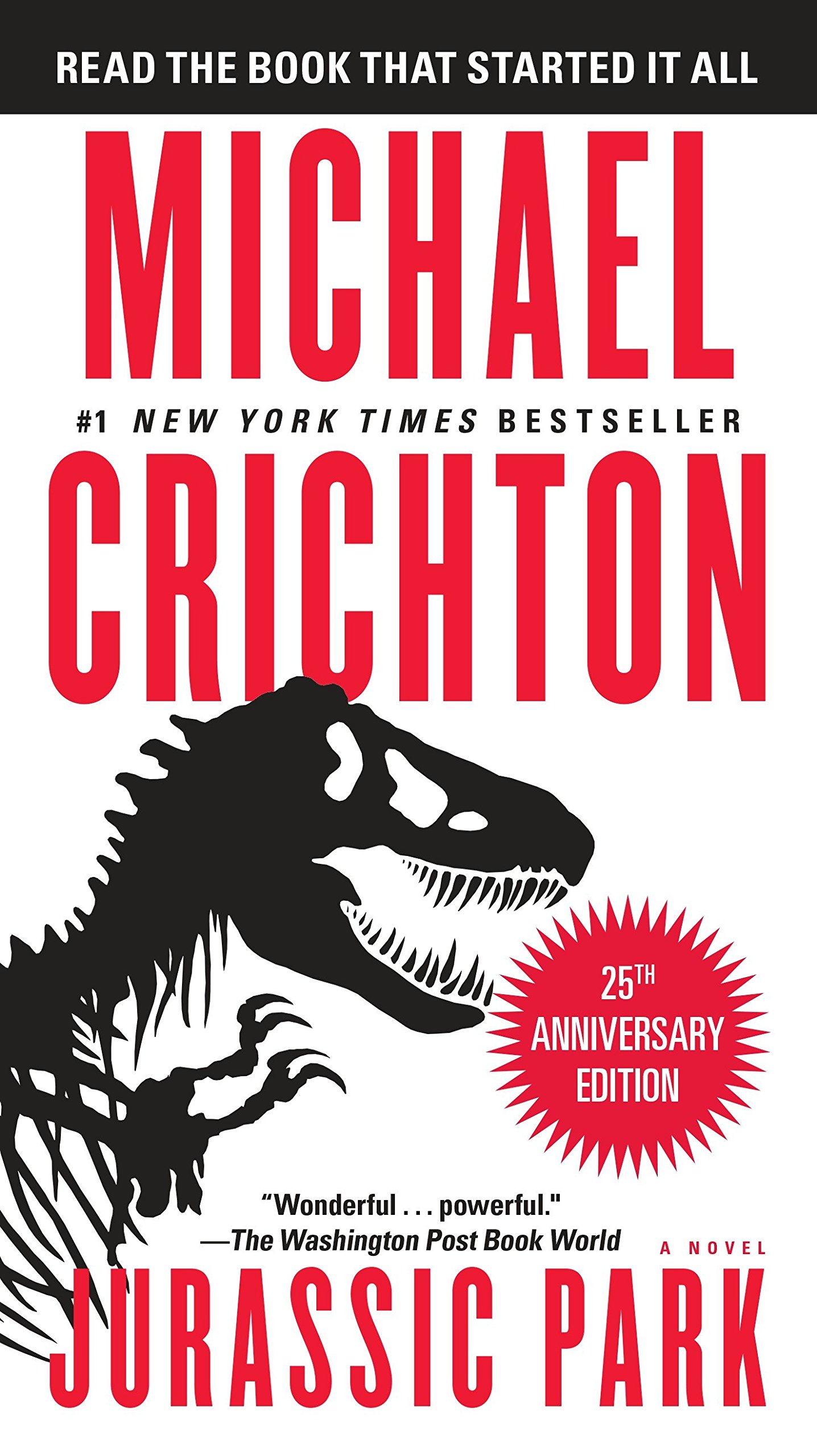
Michael Crichton.

The Jurassic Park series was excellent. If you haven't read the book, then here's a spoiler. The book is very different from the movie. And the movie glosses over the main theory on how dinosaurs are brought back from extinction. Michael Crichton also writes other books and his ability to speak in plain language is impressive.

Michael Crichton is a medical doctor, so his books have a medical theme. He is the creator of the very successful ER medical series on television. While I've probably watched only one or two ER shows, reviews are enough to tell me that it's hugely successful. 


James Michener

The first Michener book I read was Caribbean. It's a big book and Michener is known for writing epics that run in to the thousands of pages. The fact that he can keep me reading past page one thousand is a testament to his ability to research his topics so well that he's able to tell stories that span generations. I was quite surprised about how I felt when I read the tome The Covenant, which is mostly about the Boer movement into the southern part of Africa and their settlement. While I am still unsympathetic about the history of the Americas (both north and south), I have a lot more sympathy to the Dutch exiles, and their eventual claim to birthright on the continent. It's a complex story, well told.


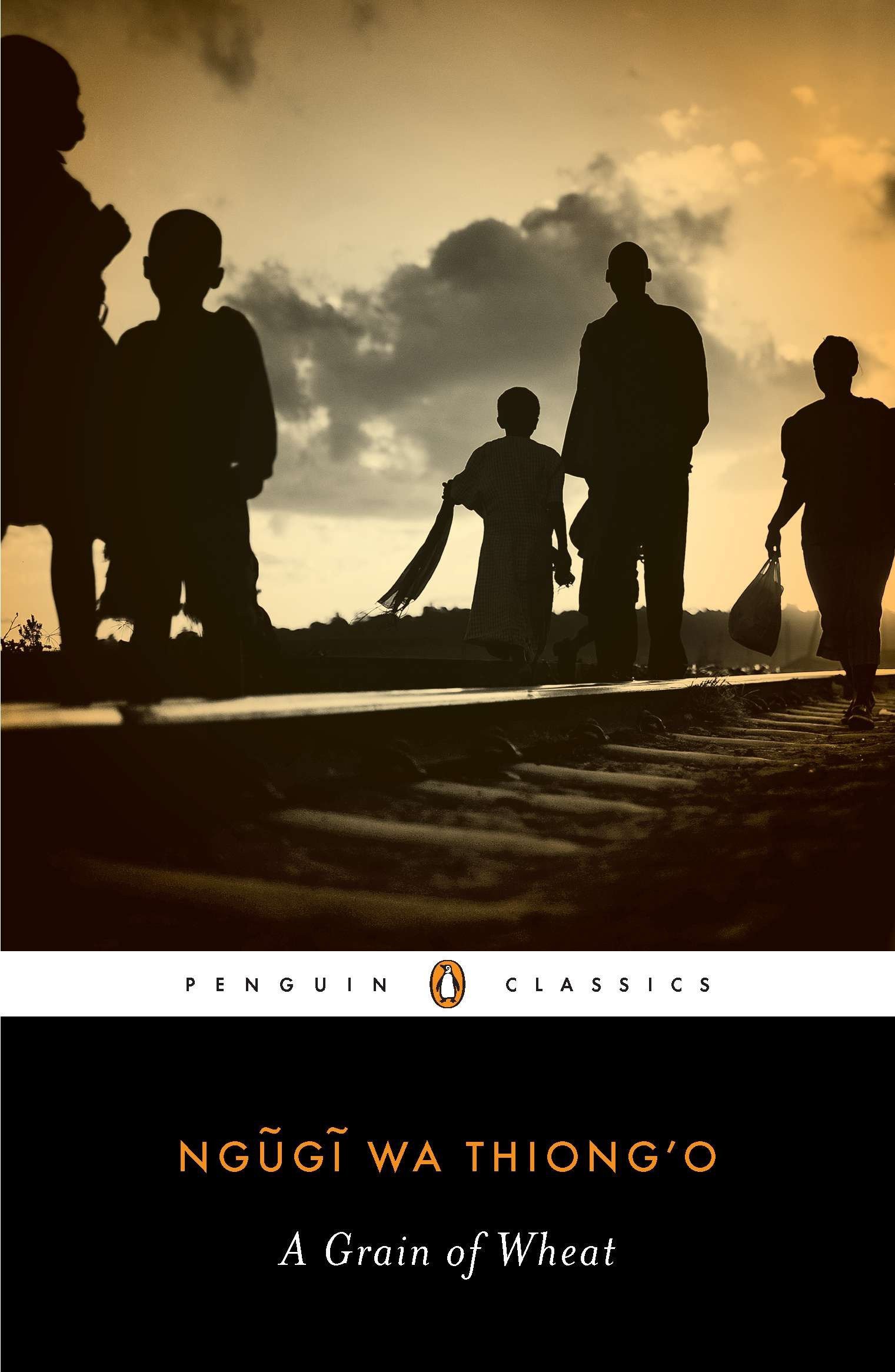
Ngugi wa Thiong'o

This writer is a super thinker, and I like his approach to telling history, by telling stories. After all, the word history, really means story. This particular novel spoke to me personally. The fears that I harbor inside my soul, when I've done something wrong, eat at the very soul of me.

In this case, Mugo is not really a hero, he's a coward who betrayed the hero. Ngugi wa Thongo leads us through the mental torment that Mugo suffers, right up to the conclusion, when it all, in the face of truth, works out.

There's a moral to this story that anyone can take away. I plan on reading it again, and again.

Stephen King

Before I read any books by Stephen King, I watched the movie Salem's Lot. I was probably in my early teens, maybe even eleven years old and it scared the hell out of me. I believe I went on to read the book, which wasn't as scary, but still a very good read. Stephen King's genre is horror, and he does a good job with it. The book Cujo is an excellent example of a well crafted story. So is Pet Sematary.

Stephen King wrote, in my opinion, one of the most readable, comprehensible books on writing that I have ever read. His memoir on how he writes, On Writing, is really well written. A book to read over, and over again. I think that in terms of methodology, I have long employed the Stephen King method of writing, without really knowing it.

Robin Cook

Another doctor on my list. Robin Cook writes medical thrillers and I've read so many of them, I don't recall the first one I read. There are certainly a lot of unscrupulous doctors, and an astoundingly, incredibly many methods of killing people. Robin Cook does a great job explaining the science and then goes on to tell you how it can be used in the most horrendous of ways.

Toxin was a particularly brilliantly written book. At the time that mad cow disease was threatening the beef industry, this book focused on salmonella poisoning and it's very aggressive viral nature. Robin Cook is a prolific writer. I wish he'd also write a book explaining his process of writing. His education as a doctor would have a huge part to play (especially when it comes to being technically correct), but the story-telling part is what I would be mostly interested in.

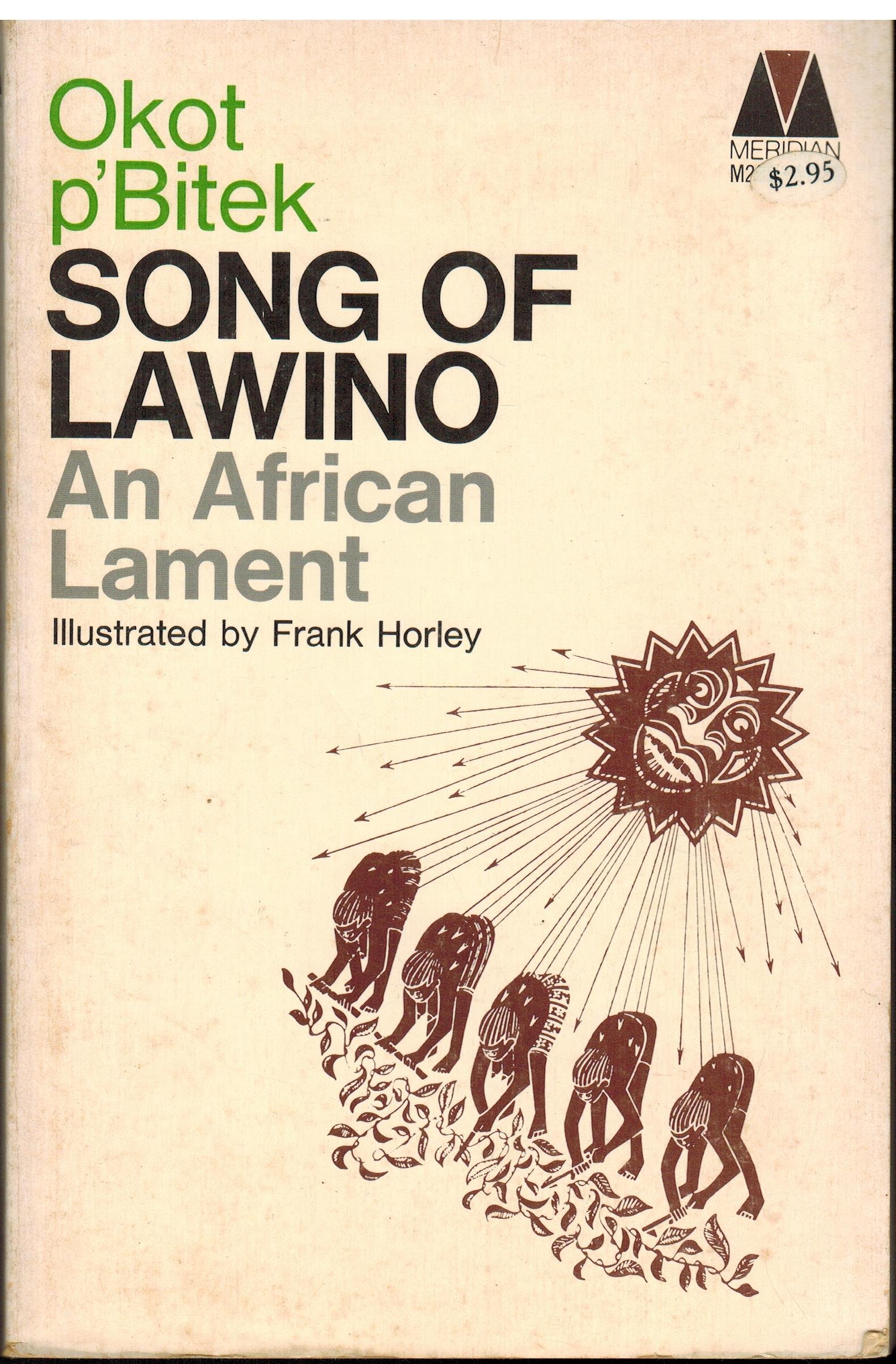
Okot p'Bitek

Another book that I read in high school, and have returned to often. This is a poem. Lawino is an African woman whose husband, Ocol, has been to Europe and is now acting like a European.

This is Lawino's poem about how she feels. About how Ocol now thinks that African ways are not good, and how he despises his own culture.

It's a powerful story, poem. And Okot p'Bitek tells is extremely well.

No doubt, I read this with some discomfort also, because I too have been trained in Europe and North America. And perhaps there are some things about that culture I much prefer to those of my own home, and my own people. But Lawino is absolutely right, and after reading this, you get a sense that, no matter where you are, you do YOU. And that focus on YOU is what we call culture - not the focus on others.

Simon Singh

Is a scientist who worked for the BBC on science features. He has taught and worked at CERN (which is a European organisation focusing on nuclear research). He's very smart, and speaks very intelligently. The first book that I read from Simon Singh was about cryptography. The science of obfuscation. About secrets and codes. The book was titled The Code Book. And it details how secrets have been managed from antiquity, till today. It's not a book for scientists. It's very readable with no formulas (or none that I recall). I've read this book a couple of times, and will read it again.

Going even deeper, Simon Singh wrote a book titled, Fermat's Last Theorem about the attempt to solve the puzzle left by Pierre de Fermat. A mathematical puzzle left in 1637 finally to be solved in 1998 by Andrew Wiles. I let the cat out of the bag, but you should still read the book. If you're so inclined.

C.S. Lewis

The Screwtape Letters was totally enjoyable. It's a screwy sort of humour that can be done badly, if a writer's not careful. But C.S. Lewis pulls it off in this book. It's a series of letters from a senior to a junior devil. The junior devil having been sent to earth to hone his skills on a particular person. And so seeks advise from the senior devil in correspondence. I don't know who carries the mail back and forth.

Like some of the material pulled off by Rowan Atkinson (Mr. Bean), there's a certain length after which it becomes tedious. But like Rowan, I think that C.S. Lewis in this book does an excellent job. Very readable again and again. I would be remiss if I didn't mention The Lion, the Witch and the Wardrobe. Most of us would have encountered this book in our teens and then long since forgotten it. But it's a good book worthy of a second and third read.

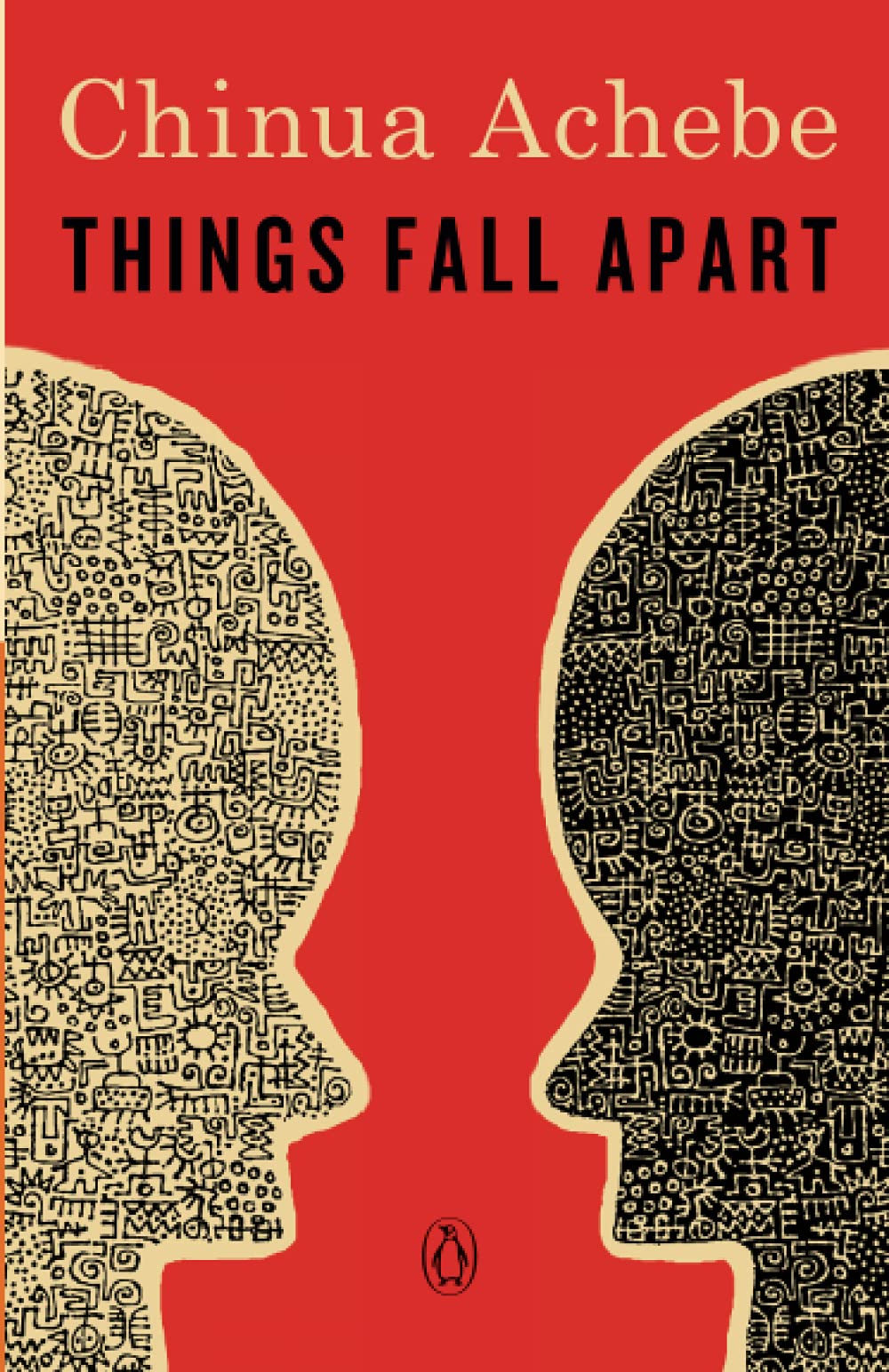
Chinua Achebe

I read Things Fall Apart in high school, and I've since read it again almost ten times. There's more here than meets the eye about Obi Okonkwo. His character, his life, his experiences tell us a lot about the culture of his time, and about human nature as well. You come to see and understand Africa through the eyes of this one person. Chinua Achebe is a favorite writer on anything african.

This is the first in a number of African series books that I enjoy. It really brings forward the ability of Africa to tell its own stories using writing in a very African style. The narrator's voice is very clear, and very African. For western readers who most likely will not have read anything African, this is a very good place to start.


Ken Follett

This is a story about Jack Builder, an English mason and arguably an Architect in medieval England. As an Architect, I found the story captivating and the characters believable. Jack Builder is looking for work and luckily lands into the greatest job of his career, building a church, later to become a cathedral. England was a deeply religious country, and many of its population were serfs working for the nobility. But it is the story of about four or five characters, from Jack to the Bishop that make this interesting reading. While reading it, you learn about the struggles of England and realize that we haven't changed that much in centuries.


James Clavell

I read this book while in high school. This is a book about Japan, and Japanese custom told in a story about the shipwrecked English captain of a Dutch ship, at a time when Japan was undergoing a leadership transition. It is political and at the time when I read it wasn't quite sure if it was just a novel or there was some accuracy to the cultural side (not the characters). I later found out that the book is surprisingly accurate in telling one side of the story of Japanese culture. I have since read other James Clavell stories (Tai-Pan, King Rat and Noble House amongst others) and enjoy Clavell's writing style and method of telling history. There is some familiarity with Ken Follet's storytelling style in Pillars of the Earth, but one can go into a long essay regarding historical storytelling, which I won't here. Just read it.


Agatha Christie

No reading list is complete without the mentioning of one of the most prolific writers of the the 20th century. Admittedly, I have not read a lot of her work, preferring instead to watch the Poirot detective series on PBS, however, one of the books I really enjoyed was Death Comes As The End, which is surprisingly set in Egypt. It's not her best work, and there are critics who will say that her characters displayed a lot of western tendencies, especially in thought. Given the fact that we are all alike across cultures, I tended to forgive her on this point, though it is difficult to be sympathetic when you apply your own thinking and prejudices to people who are not of your culture. The story itself is typical Christie, where there is a surprising end to the mystery of the deaths occurring in the house of Imhotep. Selecting the name Imhotep, one of the greatest Architects of Egypt, is probably why I picked this book to read, though I suspect if a movie was made of this book, I would have watched that instead. After reading this, I have picked up other Christie books and find the pace refreshingly quick.

Friday, February 25, 2022

Find the Dots

Update: This article was drafted on the 25th of October, 2013. It is being published on the 26th of February 2022.


I'm reminded of an exercise we did in architecture school where we had to draw, but only using dots. We weren't allowed to make a single line. I drew an apple. The best apple drawing I've ever made. It was difficult because for most of the drawing I could not see the apple. Just disorganised dots.


But I continued to plant dots, thinking of the apple, but not quite seeing it, making denser and denser dots in one area, but lighter dots in other areas. Putting dots around to define the shape of the apple. Not a line, but shape.

Dots are very forgiving. They allow you to slowly move forward. It's like looking at something blurry in the distance and as the thing moves closer towards you, you begin to make out its shape. As it gets even closer you begin to see even more detail. Light and dark shapes change into materials, glass and steel. You can see where the pockmarked concrete meets the polished wood. Soon that blurry thing is now a coherent shape. Something of substance. It has life.

That's what happened with the drawing of the dot apple. It was actually quite difficult placing that first dot. If you were making a line drawing of the apple, it's easy to sketch the outline quickly. Line drawings force you to think of the outline, the shape the final thing. After I'd made up my mind that I was going to draw an apple, and had and apple in front of me, I closed my eyes and tried to imagine where it would be on the page. In the middle of the page, of course. With line drawings, you make quick strokes to quickly see the shape. At least an outline. A guide that you're moving in the right direction. But when you're using dots even the first hundred aren't an indication of what you're trying to draw. In a line drawing someone can look over your shoulder and say "hey, that looks like an eye." And if it doesn't look like one, you can crumple that piece of paper and start over. That exercise can happen in less than a minute. "How about this one?" you ask. "Sort of like a foot!" comes the reply, and you try again.

In a line drawing if your outline is really good, you can hone in on the details. But the problem with a really good outline is that sometimes it has already achieved its purpose. Adding more lines does not add new information and the precise opposite may happen. The carefully drawn outline of the apple could become a confused pear or an avocado.

But dots don't behave the same way. A person looking over your shoulder can only ask, "what are you doing?" All that would be apparent to them are random dots.

"I'm drawing a boot," you say. "doesn't look much like a boot," they answer. You look at your dots and continue adding.

"That's an "L"," your shoulder companion says. "Go away!" you reply. No judgements can be made. Even you don't see it yet, at least not on paper. It's in your mind.

"Ah ha! I can see where you're going now. Why didn't you start with a sketch, an outline?"

"Go away," you reply again.

Let's digress for a minute. Every project must start from somewhere, from nothing. Even that line sketch must start from absolutely nothing. That point of departure, the starting point is always difficult. Always. When you're at the start line of a race, before you take that first step, you're anxious. You're anxious thinking about how the race will turn out. In your mind you've already drawn the outline and visualised the end. You're already at the finish line. Don't get me wrong, I'm not advocating getting mired in details and not worrying about the goals, but balancing the act of getting to the goal by taking care of what you are really in control of. The detail.

Balancing the act of getting to the goal by
taking care of what you are really in control of.
The Detail.

The only thing that you're really in control of at the start of a race is taking that first step. Paying attention to your body, listening to the starter, thinking of what you should do first, or next. Knowing or worrying about the ten-thousandth step does not help the goal.

When starting to build a house, when you're staring out at the empty land in preparation to dig the foundation, your only concern is that first dig, shovel into the ground.

If you want to write, you may have an idea about what your characters are going to do, but that first word decides if you will continue to write or not.

The dot drawing exercise does one thing really well. It anchors your feet to the ground forcing you to pay slow painful attention to the details.

The purpose of the dot drawing exercise is to slow you down.

The dot drawing exercise is a great tool for nearly every activity you can think of.

Find the dots.

The building of a house, or a skyscraper is done brick by brick and running a race is done one step at a time. But projects are based on much grander goals. The completion of the software project with all of its moving parts. The construction of the entire building which includes electrical wiring, heating and air conditioning systems. During a race, it's mostly about accomplishing the goal to get to the finish line. The conflict is about managing what is manageable while at the same time not losing focus on what the goal is. Keeping your focus on making sure that the dot you put down is absolutely the best dot you can put down and not worrying that you don't have visibility over the entire project. In your hand you're holding a dot, or a brick. You close your eyes and see a blurry shape of an apple, or a house. You then plant your dot, or lay down your brick.

TIME

Time is the necessary ingredient that stitches together the dots to create the apple.

PERSISTENCE

Persistence is the force, the attribute of mind that keeps you going despite the fact that you can't see anything.

CONVICTION

Conviction is that part of character, a part of faith and trust, that believes that the process will eventually turn out well despite what you are currently looking at and, most importantly, what others over your shoulder are saying. the so-called voices of the detractors.

PATIENCE

Patience, perhaps the most important of all, the ability to sit and wait. Granted, it goes hand-in-hand with conviction and persistence, because while sitting there quietly, ignoring the voices around you, you need to know that the wait will eventually end up with something good.

TRUST AND FAITH

Trust that the technique will work and that the process will result in a successful project.

But how?

Everything comes from something. There was the Big Bang that started it all and in a billennia the universe has expanded. Even life proceeds slowly and painfully, and it seems that we only perceive those moments when you look back.

Here's a summary of our ingredients:
  • Time
  • Persistence
  • Faith
  • Patience
I believe that the word faith captures both conviction and trust.

Find the dots.

Place the dots slowly and confidently while all the while, experience what is around. A dot all by itself is still a beautiful thing just like a note from a piano, or a guitar. But when combined with other dots, the union of all those dots  becomes something greater. The whole is so much greater than the sum of the parts yet the design, the placement of each part determines the beauty of the whole.

We'll get to how that happens in a moment.

Mies van de Rohe said that God is in the details. This can be extrapolated to Beauty is in the details. I recall a Ted Talk where the speaker was illustrating how matter is mostly space. When you look at an atom, it's over 90% just space, yet when  you look at a person, made of atoms, made of molecules, that person seems like solid matter. Imagine that, you're 90% made up of space, nothingness, yet there's a solid person, physically present, not a concept. Those infinitesimally insignificant atoms, in large numbers, form a coherent whole. It's at the molecular level where you see that the molecule is empty space. Further down, the atoms are also mostly space. Lastly protons, electrons and neutrons are energy in constant motion, fluctuating in shape. It's this energy that's the basis of the Carbon atom, that thing that makes our particular life form possible.

The big bang.

Molecules.

Atoms.

Electrons, protons and neutrons.

Out of nothing, everything.

Find the dots.

Find the dots in every activity that you are engaged in and then proceed on assembling and arranging the dots.

The following statement that I made previously is worth repeating again. The dot exercise is a great tool for every activity that you can think of. The dot drawing exercise does one thing really well. It anchors your feet to the ground forcing you to pay slow, painful attention to the details.

The largest hurdle I had with the dot drawing exercise was the need for immediate feedback. Something to let me know that I was on the right track. That I wasn't wasting my time and that eventually I would get somewhere. As I've grown older, I realise that my patience for engaging in activities that don't have some sort of purpose is almost non-existent. Engaging in something where at the end of the day I would have nothing to show for. And then my critics would swarm around and accuse me of having wasted all that time. They'd look at the mass of dots on the page, shake their heads, turn and walk away muttering, "man! talk about wasting time! Talk about being clueless. Of not knowing how to do anything. What an idiot!" Part of the problem is not being able to answer the question "What are you doing?" "Well, I'm drawing an apple." Or, "I'm building a house." "Don't you think you should use lines?" Or, "Don't you think you need to put down bricks in an orderly manner? You'd also finish faster if you lay down bricks in an orderly manner." Heaven forbid they should ask you to explain why you're drawing an apple using dots. Why an apple in the first case? It makes me happy. It relaxes me. It slows me down. It's not a race.

The dots can also be a great guide, the precursor to putting down that solid line, but they can also be the finished drawing themselves. Just like the electron flying wildly around the nucleus, all is nothing.

But we were discussing the issue of wasting time, the perception of wasted time. Thomas Edison is said to have invented the first commercially viable light bulb. But to get to that point, the story goes that he produced ten thousand failed bulbs. It's difficult to understand that level of persistence in the light of clear obvious failure. Why didn't he just stop and quit? The same can be said if the Wright brothers. Their first flight was a mere three seconds, which they considered a huge success. Clearly both Edison and the Wright brothers could see something that an entire population couldn't see, on this grand scale. And the fact that the rest of the world didn't share in their enthusiasm didn't deter them or cause their resolution to falter. They could see something in their minds eye. They only needed to articulate it.

This perception of wasted time is a primary part of the herd mentality. Quite a dangerous mentality to hold when you're trying to create something. Like the cow that sees fresher grass off to the side and peels away from the herd to go and eat there. All alone. There might be a few cows who yell at him, "hey, where are you going? Can't you see that we're all eating over here and doing quite well? Do you think that you found something that all of us have missed?" The herd mentality though not the focal point of this article, of the issue, has a large part to play when it comes to taking one's eye off the ball. The criticisms cause you to lose focus on the dots. You step back and convince yourself that perhaps you were originally deluded. That in fact there is no apple. You revert back to lines.

There is so much to do and deadlines are oppressively loud that the obvious thing to do is take short cuts.

The dot is the natural enemy of the short cut.

You have ten things you need to do. They're all seemingly important. Some are quite clear and will transpire naturally, like an appointment to be somewhere. Some are not so clear, they're foggy, nebulous. You have to build something. Make something. Deliver something. You're not sure what you'll need and you'll characteristically underestimate the time you'll need.

You'll find all the dots in each one of the tasks, and immediately put aside the deadline. Repetition, dots, forgiving, correcting.

The Grand Canyon, the river valley, are formed by the repetitive motion of the river water as it applies soft pressure on the hard rock. Over time the rock gives way and the river makes its path. Soft easy pressure applied consistently is often more powerful than the launch of a single atomic bomb.

Repetition is a good friend of the dot method. Its not one dot placed at a precise location that, in solidarity with the other dots, forms the whole. But the majority of dots being in approximately the right location that form the whole.

It might sound monotonous, but it really isn't. Like when meditating using a mantra, the mind is focussed on a single sound, it then disengages from the body and from external stimulus. It's free to roam within itself, outside the earth. The mantra is not the object of meditation, rather the vehicle that guides the mind towards that meditative state. Repeated over and over, it becomes like the canvas for the mind to display its art. And when the mantra's tone is extinguished, the minds meditative state is complete.

Find the dots.

What are those repetitive actions that you must take each and every day, slow plodding steps, that will become the canvas, the platform for your goal to be achieved?

The dots are atomic. The dots are repetitive. The dots provide a background.

I want to clean the kitchen, but there are dirty dishes everywhere. The task seems miserably boring. I just can't get myself to start. There seems to be no end in sight. There seems to be no end in sight. I know what the end state of the kitchen should be. That's perfectly clear. I even understand how I can start. But I just can't get myself started. There's way too much chaos. I'd even rather be doing something else. There's no desire to be inside that activity, but a huge wish to be on the other side of it. Done, completed.

Find the dots.

Pick up a single spoon, take your sweet time and wash it. Concentrate not on completing that single task but on how good it is to use water and watch that spoon slowly get clean. Slowly, not quickly.

The dot is; the water cleaning the dirt. This is the repetitive task. Like putting dots on our piece of paper, watch the water remove soap suds.

Notice the shape of the spoon and how the water runs off the edges, removing the soap and leaving the spoon shiny. Run the water over the plate. Like a river cuts into the rock eventually forming a valley, the water runs over the surface of the dish, washing away the dirt.

Don't count the dishes.

After all, you don't count the dots do you? You just keep placing them methodically. So also, don't bother counting the dishes, after all, it's not the dishes that matter. It's the flowing water. Leave the dishes alone. Look at the water. The water is the dots, not the dishes. You're aware that the dishes are there, but your focus is not on the quantity of work. Your focus is on the quality of the work. Your focus is on the quality of the one that's in your hands. Everything else around you is meaningless. The only thing that matters is the water, the single dish, the single spoon, the single fork that's in your hands.

That thought is worth repeating; Everything around you is meaningless. Your focus is on the single object that's in your hands.

Time.

Everything that happens, happens within the context of time. Time is a necessary ingredient. No matter how much effort you put into a baby, you cannot make it grow any faster than its supposed to. This is, of course, outside the scope of artificial growth as would be induced by using steroids. You just have to sit and wait for things to happen in their own time. Your job is to provide the environment and coax them along. Let time do its work. If you drop a seed on concrete paving then stand aside and watch it, nothing will happen. Most likely it will wither and die. Even though time is a necessary ingredient your participation is also necessary to coax things along for successful outcome. You need to put that seed in fertile soil and then nourish it. Continually water it and feed it. With this care in the context of time, the seed will germinate and grow into a mighty oak.

You cannot speed up time, neither can you ignore it and slow it down. You cannot rewind time. Like a conveyor belt it keeps moving and if you don't take care of things on that conveyor belt, they will still keep moving on. They won't wait for you. Time does not wait. Time is in constant motion. There's a perception of being hurried. If you turn on a tap to rinse your toothbrush before brushing your teeth, squeeze the toothpaste onto the toothbrush, start brushing your teeth without turning off the running tap of water, you may get that sense that you're being hurried. You're being rushed since it feels wasteful just to keep the water flowing. So you may hurry up to brush your teeth so that you can silence the tap. Silence the running water. But if you turn off the tap, then you can concentrate on brushing your teeth, taking your slow, sweet time because nothing is waiting for you. That's the closest you will get to stopping time. The same thing happens when you're washing dishes. The running faucet forces forces you to move a little faster. You can slow yourself down by slowing down the stream of water, the gush from the faucet quietening down. Less noise seems to indicate a slower pace.

Slowing down time is not thinking about time. Its ignoring time. Its not listening. Its being unaware, not aware. Unconscious. When you're unconscious of time, not aware of it, and are focussed on the thing in your hand, that dot, then you are truly then in the present moment. You may have heard that phrase used a lot. It has a lot of meaning but has become commercialised, so I try to avoid it, but you can't avoid everything.

Think of time as a canvas on which you paint your activities. You have this canvas in front of you on which you have to paint your activity. However, your canvas is incomplete and so you can only work on one section at a time. Your ink also arrives in drops and so you stand there, wait for each piece of the canvas to appear, then wait for the drop of ink, then you paint. And then you wait again, and repeat. Wait and repeat. Wait and repeat. And gradually once the entire canvas has appeared, you have completed painting.

Its possible that you might not do anything. The canvas might appear and you might not do anything. and so its possible that the entire canvas will present itself and you will find yourself in that situation where you have a full canvas, lots of ink, but you did nothing. The essence of procrastination. Like the moving conveyor belt, the items pass in front of you, but you don't pick them up or assemble them. But they keep moving and the nothing is constructed.  There will be days like this, but less and less once you have the dot principle well under hand. The purpose of the dot principle is that the tasks are so minutely broken down that you don't realise that you're building a complicated jumbo jet. Because that's where the seeds of procrastination start from. This overwhelming sense that the job is too big. And so you sit there wondering how it will ever get done. It's too big. And so the dot exercise tells you not to think of the entire plane. To worry about the dot that you're going to place next.

My father once wrote me a letter when I was quite distraught. I was lonely and wanted to leave my studies and go home. I don't remember much of the letter, but what I remember were two key phrases. The first was, one thing at a time, and that thing well done, is the rule of life. Sounded good, philosophical, but not practical. In a sense obvious, not earth shattering. What was I do to with advice like that? The second was, if something is worth doing, it's worth doing well. Again the commonness of that phrase lacked immediacy in what I was going through. It's like telling someone who is tired to take some rest. Of course. Or telling someone who is full to stop eating! It's only now, much later in life I've come to connect how those two phrases fit perfectly with finding the dots, especially when it concerns the aspect of time.

In the first instance, one thing at a time and that thing well done is the rule of life attests to the fact that you should put your attention on the one thing that you are doing. Place the single dot. If you're washing dishes (looks like I'm hung up on this example) then concentrate on the single spoon, the single dish, the single cup, and not on the entire heap of dirty dishes. All the while, ignoring that time is passing.

Ignore that time is passing. Concentrate on the immediate task. Ignore that time is elapsing.

Do the one thing really well. And if you do that repeatedly, the many things all well done will coalesce to form a really well done whole.

One thing at a time and that thing well done is the rule of life and the pathway to success.

The second phrase was also one that is a good example of the time aspect of finding the dot.

Long live Montreal

The following paragraph was written on 24 August 2014 and has been sitting in draft in this blog till today, the 26th of February 2022.


I remember the city, so different in culture. So unique. A personality all of its own.

Montreal, in hindsite I didn't really spend a lot of time there, but the time that I spent has turned out to have the most impact in my life. Independence uncontrolled, which eventually turned itself to maturity.

Returning here brings back so many memories, brings back so many feelings, of so many good times had. My friends and the places we went to. Life seemed to be happening here. So much life but so long ago.

The city itself hasn't changed. The people look much the same way that I left them. People seemed to be focussed on living, on bettering themselves.

And it's so different when the focus is on yourself. When you focus your life on yourself.


In 2014 I was working for the CAAT Pension Plan in Toronto, having moved up the ranks to Director, I wasn't writing software myself, but leading software developers. So I suspect that I was feeling somewhat lacking in purpose. I was probably visiting Montreal and feeling a sense of loss as to how productive I was at that time, doing a lot of different things. 

But looking back at that writing, I still have a sense that Montreal was a place for happy playing, but all grown ups leave to go and do serious work (I'm obviously joking here). Montreal gave me my gorgeous wife, who then gave me a gorgeous life (hey, that rhymes). 

I'll post this now, so that it leaves the limbo world of draft, and says nothing.


The Zone

 Until at last, at the end of human strength, beaten into the dust from which he came, the metal is ready for the Maker’s Hand

The Ten Commandments, by Cecil B. DeMille


I've always loved that quote. While it's clear in the bible that it took Moses and the Israelites 40 years to walk from Egypt to Mt. Sinai, it's not clear how long it took Moses to walk from Egypt when he was exiled to Midian. But it must have been a long and arduous walk.


I've run many marathons. In order to get into the shape you need to get into, you have to practise. And those practise sessions can also be gruelling. But strangely enough, something happens inside you at those moments when it's very tough, and you feel like giving up. If you forge through the pain, what you become in the end is nothing short of miraculous.


Beaten into the dust from which he came, the metal is ready for the Maker's Hand.


It is very satisfying to do something hard and succeed. While the elation may not last too long, what's true also is that the pain is soon forgotten.


He will not let you be tempted beyond what you can bear. But when you are tempted, he will also provide a way out so that you can endure it.

1 CORINTHIANS 10:13


Nature will not allow you to suffer indefinitely. The ultimate release is death, where there is no suffering at all. Physical suffering can be debilitating, and modern medicine has found a way to alleviate suffering for those who are really sick. However, during ancient times, when medicine was crude, the only way out from pain and suffering was truly death. If the brain could not survive the constant pain, it shut everything down.


When you run a marathon, everything starts well. The first five to ten kilometers are blissful. And if you did everything right in your preparation, then you will feel elated, no pain at all. Between the tenth and the twentieth kilometer, you begin to feel everything in your body. And you slowly switch from your physical strength, to the strength of your mind. From the twentieth kilometer to the thirtieth, your mind is totally in control and you become your own motivational speaker. The last ten kilometers is where the metal is being forged and beaten. Some of us run into the famous wall. Smack dab into it, but always, the strength of our minds, knowing that we will see a finish line keep us moving forward.


In work too we see the same thing. Unclear, vague goals, wading through murky politics. Slogging through. Like a construction site, very messy at the start and even worse in the middle. But the builder can close their eyes and see the finished product, because they've been here before. It's the storm before the calm. And it is inevitable in life. 

AVOID SUFFERING

You can't. Even if you're a billionaire, with an island far from rough humanity, with all the comforts you need. At some point Murphy will pay you a visit. It's inevitable. Murphy is the constant, just like they say that change is the only constant thing in life.


Since you cannot avoid suffering, expect it at every turn, look on its face acceptingly, knowing like all things, it will pass at some point. The past couple of years have been challenging, running a business is not all fun and games, there are many challenging moments, moments of doubt, moments of insecurity, moments when you even doubt your ability to get to the finish line. But that too is the famous wall, and it inevitably always passes.

Tuesday, February 22, 2022

And we're back... LIVE.

It's Monday February 21st, and I finished reading Julia Cameron's book, the Artist's Way in which she presents a way for anyone to release their creativity and live the life that they were born to live as a creative person.

I read it because, while I spend time writing a longhand journal, and from time to time blog in here, I have written two short stories and have two longer works that have been languishing for more than I'd like to admit. So long that I have to re-read them to try to figure out what my characters are doing and where they are.

In itself, the book was quite good though I must admit the woo-woo spiritual style of the language did not appeal to me. Not that I'm against spirituality, rather that there was too much of it, on every single page. The self-reflection exercises (fill in the blanks) and questions remind me of many work-related team-bonding exercises we had. The speaker would let us do all the work, standing in front at the stage, simply pointing and asking team-building-type questions and remarking that there were no wrong answers. Of course that didn't help me.

At the beginning of the book I did all of the exercises, but as I got to the end, didn't pick up a pen, did the answering mentally. There was a sense of too much repetition.

But I did get one good thing out of it, and that's shown by the fact that I'm here in front of this keyboard writing this. It's going to be a 75-percent effort in getting something done. The thing that I got out of the exercise was to stick to Morning Pages.

MORNING PAGES

An exercise done every morning to write in longhand three pages of anything. Just letting your pen flow on the page and gush out whatever comes out. Ignoring the Censor (capital-C) who's there guiding you with structure, spelling and organizing the sequence of thought. And even if you have nothing to say, writing down, "I have nothing to say" on the page was movement of the pen on paper.

I found the Morning Pages super valuable. I started them on February 3rd and have been writing them consistently till today (February 21st as I write this). I haven't missed a day and I found out that it takes me about 30 minutes to write three pages in longhand - especially when I'm just blurting out stuff.

The other exercise that Julia asks us to do early in the book are Artist Dates. In this exercise, you find a day (in a week I think) and head out to treat yourself. Be frivolous and whimsical and treat yourself as someone special. I don't think I managed to do even one. Prior to reading this book I was already used to heading out on my own, to my favorite cafe and sit quietly reading or just enjoying a coffee and a snack. I thought that I could change this to walks in the neighborhood, but I haven't yet done one. I think this is an exercise that I will soon start, it did make a lot of sense to me that writers must spend a lot of time listening, and that will happen naturally when you're outside.

The title of this short note, And we're back... LIVE, is supposed to motivate me to try and get back into the groove that I have forgotten. It's true that I spend a lot of time waiting for some inspiration to hit me before I type a single word. I ask myself if this is worth writing, or even more, worth reading. And I am my harshest critic, because there's a lot to write about. Not just internal, philosophical or meditation stuff, but also technical and interesting stuff. I read other blogs and find that I can get one piece of information in a lot of reading so it's not so important that I make every sentence memorable. It just won't happen.

Last year I tried my hand at doing YouTube blogs - and that was a lot of fun. They were crude and there were a lot of mistakes so one of the first things to do this year is to review them and re-do them, possibly on my new MacBook Air. A couple of training videos on learning Python programming and then more material on building websites using Python and Flask.

I would definitely recommend reading Julia Cameron's book. It did help me get out of thinking that unless something is perfect it should not be exposed to the world. It also helped me write consistently every morning about things that were going on in my mind and eventually releasing them from what was bothering me. I found that Julia's book, specifically the Morning Pages resonates with Natalie Goldberg's Writing Down the Bones. A book that took me a few tries to try and get finished. The first time around, I borrowed the book from the Toronto Public Library and got through less than a quarter of it. But I found that I needed to borrow it again, and the second time I made it to at least half way. The third time I was committed to finishing the book and I did. Like Julia, Natalie can also sink into woo-woo spirituality, and it's no surprise since I found out that they know each other very well (if I'm not wrong, Natalie may have written the Foreword in one of Julia's editions). But the totality of Natalie's book is like a very long essay in Morning Pages. But in these writing sessions, Natalie gives a ton of guidance.

I have since gone out and bought Natalie's book and plan on giving it a third read. There's really good stuff about getting your words down on the page and making sure that the Censor isn't around when your in your first draft. It's important not to continually edit your thoughts as you type, or handwrite, whatever you are typing or handwriting. You can do that the next day, when your Censor is allowed a brief look at the material. You should compare your material to the stuff you wrote yesterday, and not to what Michael Crichton, Dan Brown or John Grisham are doing today. That will just stall you and your Censor is probably doing that comparison.

The main idea of writing a book is to explore as you go along and make sure that you release the characters to develop. I cannot believe that J.R.R. Tolkien had the Lord of the Rings trilogy mapped perfectly before putting pen to paper. I suspect that some of that stuff came up as he wrote. Leo Tolstoy was another avid writer and I suspect also, that there's a general direction, and that's all you need. You may have a good idea of the ending, but that can change - the character may not want to do what you want them to do.

And so our plan is to write a page here daily, we'll start with some updates on how this is going and then perhaps get back into the storytelling that I used to do on this blog. In the next letter, I will write about my personal experiences with travel in this world of covid. I travelled recently and each flight was stressful and all because of the testing requirements before you can even hop on a plane. I think I'm going to stay put for a while until this pandemic blows over.

Last thoughts in the 10 minutes that I have. 

  1. Productivity is better than talent.
  2. Perfection is procrastination.
  3. Write first, think later.
  4. Passion trumps blank pages.
  5. If you don't like outlines, don't do them.
  6. It doesn't matter if your thoughts are disjointed, it's a draft.
  7. Enjoy the journey, it's more interesting than the destination.
  8. Feel each word and each sentence as it comes from you onto the page - savour it, enjoy it.
  9. It's OK to be tired.
  10. Try writing at least one time when you're super groggy and tired.
  11. Make writing something you do not just at your desk, but any time.
  12. Carry a small notebook and a pen to jot things down as your day progresses.
  13. Read.
  14. Watch the clock and don't overdo it.
  15. When the clock says stop, stop.
  16. It will take a month to form the habit, so commit for the first month to write daily.
  17. Excuse yourself when. you have nothing to say, and copy your own words again.
  18. Read (again).
  19. Sometimes a pen and paper work better than a computer keyboard.
  20. If it was easy everybody would do it.
  21. Original thoughts are old thoughts revised for the modern world.
Nothing there is new, some may have popped into my mind from memories that I have had, and some may be things I read recently. Nothing under the sun is new said the preacher (or teacher) in Ecclesiastes. And if you go by that saying, then you won't be afraid to hash out a story.

It's the same reason when you go to the library, and there are a hundred books on calculus. They're all similar, but written by different people and different books will appeal to different people.

I'll stop here and we will edit this tomorrow (or this evening) for publication ASAP.

Hope you got something out of this, even just a nugget.

Monday, January 10, 2022

Quotable Quotes

Words inspire. Think of the general in front of the soldiers. They're about to face a formidable enemy who outnumber them greatly. The general knows this. The soldiers know this. But they must fight. They cannot run. And so the general inspires them with words, to prepare them mentally for the fight. That, and some whiskey, give them enough courage to fight. Because we know that your mental state contributes more than 50% to your chances of success. Anyone who has taken a driver's test will confirm this. Words not only inspire, but they give you confidence. They put a smile on your face. 

So read on, share these words, and smile.

Here are a few of my favourites. They can be found on my website https://mathenge.ca/quotes/.

HUMOUROUS

I love deadlines. I like the whooshing sound they make as they fly by.

  • Douglas Adams

I like work: it fascinates me. I can sit and look at it for hours.

  • Jerome K. Jerome

When I was in high school, I got into trouble with my girlfriend's dad. He said, "I want my daughter back by 8:15." I said "the middle of August? Cool."

  • Steven Wright

The lion and the calf shall lie down together but the calf won't get much sleep.

  • Woody Allen

It may be that your sole purpose in life is to serve as a warning to others.

  • Steven Wright

If only God would give me some clear sign! Like making a large deposit in my name at a Swiss bank.

  • Woody Allen

Bigamy is having one wife too many. Monogamy is the same.

  • Oscar Wilde

I'm writing a book. I've got the page numbers done.

  • Steven Wright

Your manuscript is both good and original, but the part that is good is not original and the part that is original is not good.

  • Samuel Johnson


INSPIRATIONAL

90% of life is just showing up.

  • Woody Allen

Success is liking yourself, liking what you do, and liking how you do it.

  • Maya Angelou

Remind yourself that you cannot fail at being yourself.

  • Wayne Dyer

The talent for being happy is appreciating and liking what you have, instead of what you don't have.

  • Woody Allen

Success is walking from failure to failure with no loss of enthusiasm.

  • Winston Churchill

Motivation is what gets you started. Habit is what keeps you going.

  • Jim Ryun

What we think, or what we know, or what we believe is, in the end, of little consequence. The only consequence is what we do.

  • John Ruskin

I have been impressed with the urgency of doing. Knowing is not enough; we must apply. Being willing is not enough; we must do.

  • Leonardo Da Vinci

You miss 100 percent of the shots you never take.

  • Wayne Gretzky

A ship in port is safe, but that’s not what ships are built for.

  • Grace Hopper

I’ve missed more than 9000 shots in my career. I’ve lost almost 300 games. 26 times I’ve been trusted to take the game winning shot and missed. I’ve failed over and over and over again in my life. And that is why I succeed.

  • Michael Jordan

We become what we think about.

  • Earl Nightingale

You can never cross the ocean until you have the courage to lose sight of the shore.

  • Christopher Columbus

There is only one way to avoid criticism: do nothing, say nothing, and be nothing.

  • Aristotle

It does not matter how slowly you go as long as you do not stop.

  • Confucius

Three may keep a secret, if two of them are dead.

  • Benjamin Franklin

Work like you don't need money, love like you've never been hurt, and dance like no one's watching.

  • Unknown Author

Education is what remains after one has forgotten what one has learned in school.

  • Albert Einstein


PHILOSOPHICAL

It is better to fail at your own life than to succeed at someone else's.

  • Andre Gide

A journey of a thousand miles begins with a single step.

  • Lao Tzu

Whether you think that you can, or that you can't, you are usually right.

  • Henry Ford

An eye for an eye only ends up making the whole world blind.

  • Mohandas Gandhi

To think is easy. To act is hard. But the hardest thing in the world is to act in accordance with your thinking.

  • Goethe

The richest man is not he who has the most, but he who needs the least.

  • Unknown Author

Be yourself; everyone else is already taken.

  • Oscar Wilde

I hear; I forget. I see; I remember. I do; I understand

  • Chinese proverb

Good judgement comes from experience, and experience comes from bad judgement.

  • Barry LePatner

If I have seen further, it is by standing on the shoulders of giants.

  • Isaac Newton

Everyone thinks of changing the world, but no one thinks of changing himself.

  • Leo Tolstoy

You probably wouldn't worry about what people think of you if you could know how seldom they do.

  • Olin Miller